What is camelina?
•Posted on September 03 2025
7 things to know about camelina 🌱
Camelina is a plant that remains relatively unknown, but it deserves our full attention. Ancient, hardy, and perfectly adapted to our soils, it represents a promising agricultural resource for the future. Here are 7 key facts to discover:
1. A plant cultivated for over 3,000 years
Camelina has been part of human history for millennia. Already used in the Bronze Age, it is now making a comeback thanks to its many benefits.
2. A member of the cruciferous family
Like cabbage, mustard, or broccoli, camelina belongs to the cruciferous family. Its hardiness and adaptability make it a reliable crop.
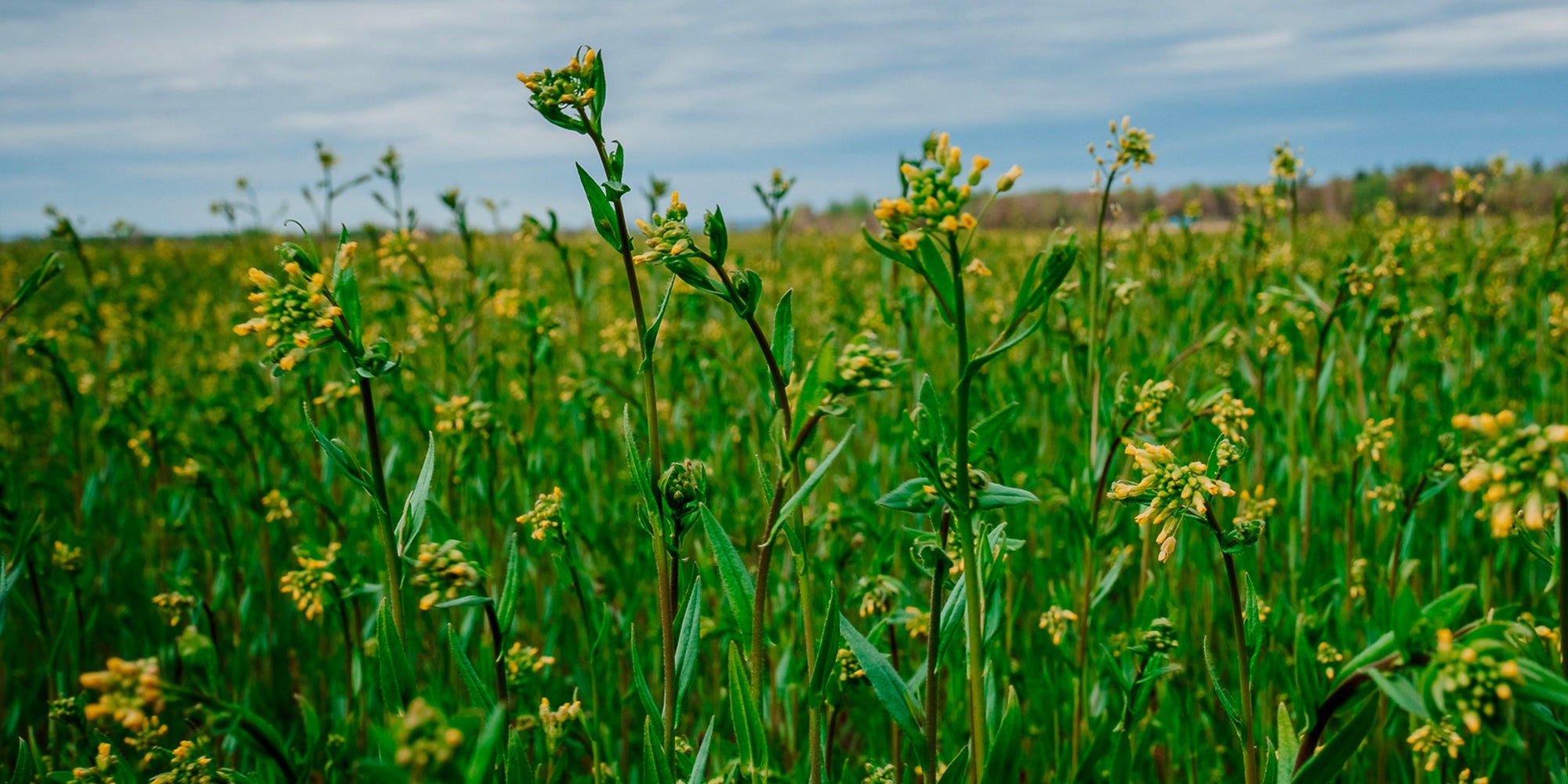
3. A field of small yellow flowers
This unassuming plant produces slender stems adorned with small yellow flowers, which brighten the fields when in bloom.
4. Tiny but precious seeds
Its golden seeds, only 2 mm in size, are highly nutritious. They form the basis of various agricultural products, useful for animal feed as well as other purposes.
5. A hardy and resilient plant
Camelina adapts easily to northern climates and is resistant to disease, making it a reliable crop even in difficult conditions.
6. Water and input efficient
Undemanding, it requires little irrigation and few fertilizers, contributing to sustainable and environmentally friendly agriculture.
7. Perfectly suited to Quebec soils
Camelina thrives particularly well in our soil. Grown locally, it represents an asset for diversifying and strengthening our agricultural production.
👉 In short, camelina is a plant worth rediscovering. Both ancient and modern, it stands out as a sustainable, robust crop adapted to local conditions.